
Beacon Lighting Supply | Lighting the Way
Vapor-Tight Lights Explained: Where and When to Use Them
When it comes to commercial and industrial lighting, not every environment is suitable for standard LED fixtures. Warehouses, parking garages, manufacturing plants, food processing facilities, and other demanding locations often expose lighting equipment to moisture, dust, humidity, and airborne contaminants.
That's where LED vapor-tight lights come in.
Designed for challenging environments, vapor-tight lighting fixtures provide reliable illumination while helping protect sensitive electrical components from environmental exposure. Their durable construction makes them a popular choice for businesses looking to improve lighting performance, reduce maintenance costs, and extend fixture life.
But what exactly are vapor-tight lights, and when should you use them?
In this guide, we'll explain how vapor-tight LED fixtures work, where they're commonly installed, and what to consider when selecting the right commercial lighting solution for your facility.
What Are Vapor-Tight LED Lights?
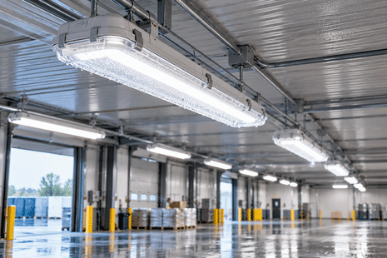
Vapor-tight lights are enclosed lighting fixtures designed to resist moisture, dust, dirt, and other environmental contaminants. Unlike traditional open or minimally protected fixtures, vapor-tight luminaires typically feature sealed housings, protective lenses, and gaskets that help prevent unwanted particles and moisture from reaching internal components.
Most modern vapor-tight fixtures use LED technology, providing energy-efficient illumination with reduced maintenance requirements compared to older fluorescent lighting systems.
Common construction features include:
-
Sealed housings: Help protect internal components from moisture, dust, and debris.
-
Protective gaskets: Create a barrier between the fixture housing and lens.
-
Impact-resistant lenses: Often manufactured from durable polycarbonate or acrylic materials.
-
Corrosion-resistant components: Help improve durability in demanding environments.
-
Energy-efficient LEDs: Deliver consistent illumination with lower energy consumption than many traditional lighting systems.
These features make vapor-tight LED lighting particularly useful in commercial and industrial spaces where conventional fixtures may deteriorate prematurely.
Explore our selection of LED Vapor Tight Lighting Fixtures at Beacon Lighting Supply.
Where Are Vapor-Tight Lights Used?
Vapor-tight lighting is commonly installed in locations where moisture, dust, and changing environmental conditions can affect fixture performance.
1. Warehouses and Distribution Centers
Warehouses and distribution facilities often experience dust accumulation, temperature fluctuations, and moisture exposure near loading docks.
In these environments, vapor-tight LED fixtures can provide dependable illumination while protecting lighting components from airborne debris.
They are particularly useful in:
-
Loading docks and receiving areas
-
Dusty storage facilities
-
Distribution centers
-
Maintenance corridors
-
Unconditioned warehouse spaces
For facilities requiring higher lumen output, specialized vapor-tight high bay fixtures may provide the illumination needed for elevated mounting heights.
For example, the EarthTronics LVTHBWS200CCTD5 Wide Body Vapor Tight offers a listed output of 32,000 lumens and selectable lighting settings, making it worth evaluating for demanding industrial applications.
2. Parking Garages and Covered Parking Structures
Parking garages are exposed to changing temperatures, vehicle exhaust, dust, humidity, and occasional water intrusion.
Vapor-tight lighting helps protect fixtures against these conditions while supporting visibility for drivers and pedestrians.
Typical applications include parking decks, enclosed garages, stairwells, pedestrian walkways, and maintenance areas.
When selecting fixtures for parking structures, consider mounting height, illumination uniformity, glare control, and appropriate wet-location ratings.
3. Car Washes and Washdown Areas
Car washes are among the most demanding environments for lighting equipment.
Fixtures may encounter high humidity, water spray, cleaning chemicals, and frequent temperature changes.
Properly rated vapor-tight LED lights can help withstand these conditions while delivering dependable illumination.
However, not every vapor-tight fixture is suitable for direct washdown. Facilities using pressurized cleaning equipment should verify the fixture's ingress protection rating, wet-location listing, and chemical compatibility before installation.
4. Food Processing and Commercial Kitchens
Food processing facilities often require lighting capable of withstanding moisture, frequent cleaning, and airborne contaminants.
Vapor-tight fixtures can be used in appropriate locations such as:
-
Food preparation and packaging areas
-
Refrigerated processing spaces
-
Commercial kitchens
-
Beverage production facilities
-
Sanitation and washdown zones
In regulated food processing environments, buyers should also evaluate applicable NSF requirements, lens materials, and any special restrictions related to sanitation or food-contact zones.
A standard vapor-tight fixture is not automatically approved for every food processing application.
5. Cold Storage and Refrigeration Facilities
Refrigerated warehouses and freezer facilities create unique challenges for commercial lighting.
Low temperatures, condensation, and repeated transitions between warm and cold areas can affect lighting equipment.
LED vapor-tight fixtures designed for cold environments can provide reliable illumination while helping protect internal components.
Before selecting a fixture, confirm its minimum operating temperature and suitability for the expected condensation conditions.
6. Agricultural and Industrial Facilities
Agricultural buildings, industrial workshops, and manufacturing facilities may expose lighting systems to dust, humidity, airborne particles, and corrosive substances.
Vapor-tight fixtures can be useful in:
-
Agricultural storage buildings
-
Equipment maintenance shops
-
Manufacturing plants
-
Utility and mechanical rooms
-
Industrial service corridors
In environments containing corrosive chemicals, ammonia, or other aggressive substances, additional material compatibility requirements may apply.
Understanding Vapor-Tight Lighting IP Ratings
One of the most important considerations when purchasing vapor-tight LED fixtures is the Ingress Protection (IP) rating.
IP ratings describe the level of protection an enclosure provides against solid objects and water.
Common ratings include:
| IP Rating | Protection |
|---|---|
| IP65 | Dust-tight and protected against water jets |
| IP66 | Dust-tight and protected against powerful water jets |
| IP67 | Dust-tight and protected against temporary immersion under specified conditions |
For many commercial applications, IP65-rated LED vapor-tight fixtures provide an appropriate level of protection against dust and water spray.
More demanding environments may require IP66 or another specialized enclosure rating.
Importantly, an IP rating alone does not establish that a fixture is suitable for every wet location, chemical environment, or cleaning process. Always review the manufacturer's specifications and applicable safety listings.
For a more detailed explanation, read our guide: IP Ratings Explained: What IP65, IP66, and IP67 Mean for Lighting.
Vapor-Tight vs. Waterproof vs. Explosion Proof Lighting
These lighting terms are sometimes used interchangeably, but they describe different requirements.
Vapor-Tight Lighting
Designed to resist moisture, dust, and environmental contaminants through protective enclosure construction.
Waterproof Lighting
A general marketing term often used for fixtures designed to resist water exposure. Actual protection depends on the product's tested ratings and listings.
Explosion-Proof Lighting
Specialized lighting designed and certified for particular hazardous locations where flammable gases, vapors, or combustible dust may create an ignition risk.
A vapor-tight fixture is not automatically explosion-proof.
For facilities with classified hazardous locations, contractors must select lighting specifically approved for the applicable location classification.
Benefits of LED Vapor-Tight Lighting
Improved Energy Efficiency
Replacing outdated fluorescent vapor-tight fixtures with modern LED models can significantly reduce electricity consumption.
LED fixtures produce useful illumination with less wasted energy, helping facilities lower operating expenses.
Actual savings depend on the wattage, operating hours, and efficiency of the existing and replacement systems.
Reduced Maintenance Costs
Lighting maintenance can become expensive in warehouses, parking garages, and industrial facilities where fixtures are difficult to access.
LED vapor-tight fixtures reduce the need for frequent lamp replacement, while their protective enclosures help limit exposure-related damage.
This can reduce maintenance labor, equipment rental expenses, and operational disruptions.
Long Operating Life
Many commercial LED vapor-tight fixtures are designed for tens of thousands of operating hours.
When properly specified and installed, their combination of efficient LED technology and protective construction can support long-term reliability.
Improved Lighting Quality
Modern LED vapor-tight fixtures offer a range of color temperatures, lumen outputs, and optical designs.
Compared with aging fluorescent systems, an appropriately designed LED installation may provide more consistent illumination and better visibility.
Some models also include selectable wattage, adjustable color temperature, dimming, and emergency battery backup options.
How to Choose the Right Vapor-Tight LED Fixture
Selecting the right fixture requires more than choosing a wattage or fixture length.
Consider the Installation Environment
Start by identifying the environmental conditions.
Will the fixture be exposed to humidity, direct water spray, dust, freezing temperatures, or cleaning chemicals?
Choose a fixture with the appropriate environmental ratings and construction materials.
Determine the Required Lumen Output
Lumens measure the amount of visible light emitted by a fixture.
The required output depends on the size of the space, mounting height, work activities, and desired illumination levels.
A warehouse aisle may require a different lighting design than a small utility room or covered walkway.
For larger facilities, a photometric lighting layout can help determine appropriate fixture quantities and spacing.
Choose the Right Color Temperature
Commercial vapor-tight LED fixtures commonly offer color temperatures such as:
-
3500K: Neutral white illumination suitable for certain workspaces.
-
4000K: A balanced white appearance commonly used in commercial environments.
-
5000K: Cooler, daylight-like illumination frequently selected for industrial work areas.
The ideal color temperature depends on the application and facility preferences.
Evaluate Controls and Additional Features
Depending on the project, useful features may include:
-
0–10V dimming
-
Occupancy sensors
-
Selectable wattage
-
Selectable color temperature
-
Emergency battery backup
-
Surface or suspended mounting options
These features can improve flexibility and help facilities manage energy consumption.
Shop Vapor-Tight LED Lighting at Beacon Lighting Supply
At Beacon Lighting Supply, we offer commercial and industrial lighting solutions for contractors, property managers, facility maintenance teams, and business owners.
Our vapor-tight lighting selection includes options for a variety of installation requirements.
EarthTronics Vapor-Tight LED Fixtures
Explore selectable 2-foot, 4-foot, and 8-foot vapor-tight lighting options for commercial and industrial applications.
ASD LED Vapor-Tight Fixtures
Browse vapor-tight lighting solutions with selectable wattage, multiple color temperatures, and available dimming or emergency options.
LEDone Vapor-Tight Lighting
Discover additional LED vapor-tight fixtures designed for demanding commercial lighting projects.
Shop Vapor Tight LED Lighting at Beacon Lighting Supply
Frequently Asked Questions About Vapor-Tight Lights
Can vapor-tight lights be used outdoors?
Yes, certain vapor-tight fixtures are suitable for outdoor installation. Always verify the manufacturer's wet-location listing, IP rating, and environmental requirements.
Are vapor-tight lights waterproof?
Many vapor-tight fixtures provide substantial water resistance, but protection varies by product. An IP65 rating, for example, does not mean a fixture can be submerged underwater.
Can vapor-tight lights replace fluorescent fixtures?
Yes. LED vapor-tight fixtures are commonly used to replace older fluorescent systems. Contractors should compare lumen output, fixture dimensions, mounting requirements, voltage, and electrical compatibility.
Do all warehouses need vapor-tight lighting?
No. Clean, dry, climate-controlled warehouses may be adequately served by standard LED high bay or linear lighting. Vapor-tight fixtures become especially useful where moisture, dust, or other contaminants create additional risks.
Final Thoughts: When Should You Use Vapor-Tight Lights?
Vapor-tight LED lighting is an effective solution for commercial and industrial environments where moisture, dust, humidity, and other contaminants can compromise conventional fixtures.
From warehouses and parking garages to car washes, food processing facilities, and cold storage buildings, these durable lighting systems help businesses maintain dependable illumination while reducing maintenance demands.
The key is selecting fixtures based on actual environmental conditions, appropriate ratings, and lighting performance requirements.
Looking for vapor-tight LED lighting for your next commercial or industrial project?
Explore the selection at Beacon Lighting Supply or contact our team for assistance finding lighting solutions that meet your facility's requirements.