Beacon Lighting Supply | Lighting the Way
Wet utility rooms, washdown areas, parking structures, and dusty back-of-house spaces all create the same problem - ordinary fixtures fail early. When moisture, vapor, debris, and temperature swings are part of the environment, vapor proof light fixtures are often the right answer because they are built to protect the lamp and internal components from conditions that shorten fixture life.
For contractors, facility teams, and procurement buyers, the value is straightforward. A properly specified fixture helps reduce maintenance calls, protects light output, and avoids premature replacement in spaces where access is inconvenient or downtime is costly. The key is choosing the right fixture for the actual environment instead of assuming every gasketed housing is built to the same standard.
What vapor proof light fixtures are designed to do
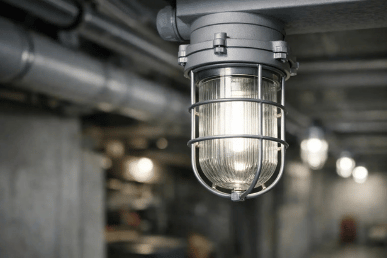
Vapor proof light fixtures are enclosed lighting units built to resist moisture, humidity, water spray, dust, dirt, and airborne contaminants. Most use a sealed housing with a durable lens and gasket system that helps keep outside elements away from the electrical components and light source.
That design makes them a practical fit for car washes, food processing areas, tunnels, agricultural buildings, service corridors, locker rooms, industrial facilities, and outdoor covered locations. They are also common in stairwells, parking garages, and utility spaces where maintenance teams need dependable illumination with less exposure-related failure.
The term itself can cause confusion. Vapor proof does not automatically mean hazardous location rated, explosion proof, or suitable for every corrosive or classified environment. In some applications, a standard vapor-tight fixture is enough. In others, especially where flammable gases or combustible dust are present, you may need a more specialized fixture category entirely.
Where vapor proof light fixtures make the most sense
The best use case is any area where a conventional commercial fixture would be exposed to repeated moisture or contamination. In a warehouse, that may mean a loading area with wind-driven dust and temperature swings. In a multifamily property, it may be a damp service corridor or laundry room. In an industrial plant, it may be a processing area that sees washdown and airborne residue.
These fixtures also make sense when maintenance access is difficult. If a fixture is mounted in a long utility tunnel, above a service bay, or in a cold storage support area, paying more upfront for a sealed, durable housing usually makes financial sense. The fixture cost is only part of the equation. Labor, lift access, disruption, and replacement frequency matter just as much.
LED models are especially useful in these settings because they combine enclosure protection with longer operating life and lower energy use. For facilities upgrading from fluorescent strips, this can improve both reliability and light quality while reducing relamping cycles.
What to look for before you buy
Fixture selection should start with the environment, not the product photo. A fixture that looks industrial may still be the wrong fit if the ratings, materials, or mounting style do not match the job.
Ingress protection and enclosure quality
Start with the IP rating. This tells you how well the fixture resists solids and liquids. Higher protection is generally better for demanding environments, but the right rating depends on exposure. A damp mechanical room does not need the same level of protection as a hose-down processing space.
Look closely at the housing material, lens construction, and gasket quality. Polycarbonate housings are common because they resist impact and corrosion well, while some applications benefit from fiberglass or metal construction. Lens strength matters in active commercial and industrial spaces where impact resistance is part of the job.
Temperature and operating conditions
Not every enclosed fixture performs the same way in heat or cold. If the fixture will be installed in a freezer area, an unconditioned exterior corridor, or a hot industrial zone, check the operating temperature range. LED performance and driver life can vary significantly based on ambient conditions.
This is also where buyer assumptions can cause problems. A fixture may be sealed against moisture but still not be optimized for constant low-temperature starts or sustained high-heat operation.
Light output and distribution
Too much focus on enclosure ratings can lead buyers to overlook the lighting performance itself. You still need the right lumen package, lens type, and beam distribution for the task. A narrow service hallway, for example, has different lighting needs than a wide maintenance bay or covered parking lane.
Color temperature and color rendering matter too, especially in commercial settings where visibility and comfort affect operations. Cooler color temperatures are often used in utility and industrial spaces for a crisp, high-visibility appearance, but that choice depends on the site and occupant expectations.
Mounting and electrical compatibility
Surface mount, suspended mount, and bracket options can all affect installation time and layout flexibility. For retrofit work, fixture dimensions and wiring compatibility are especially important. Even a strong fixture choice can become inefficient if it creates labor complications or requires unexpected field modifications.
For larger projects, it helps to review voltage requirements, emergency options, occupancy controls, and whether the fixture family supports consistent ordering across multiple locations.
Common mistakes when specifying vapor proof fixtures
One of the most common mistakes is buying based on a general category label without confirming actual ratings and construction details. "Vapor proof" is useful shorthand, but procurement decisions should still be based on specification sheets, environment, and code considerations.
Another mistake is overspecifying. In some applications, buyers select the most extreme enclosure available when a more standard commercial sealed fixture would perform perfectly well. That can increase project cost without delivering meaningful value. The reverse problem also happens often - using a lower-grade fixture in an area with regular washdown, chemical exposure, or airborne debris and then dealing with avoidable failures.
There is also the question of material compatibility. If the environment includes chemicals, salt exposure, oils, or corrosive agents, the housing and lens material should be reviewed carefully. A fixture that performs well in a damp parking structure may not hold up the same way in a processing area with aggressive cleaning routines.
LED vapor proof fixtures versus older fluorescent models
Many existing facilities still operate fluorescent vapor-tight fixtures, especially in maintenance and utility spaces. These installations often continue working, but aging lamps, ballast failures, and lower efficiency create a clear case for LED replacement.
LED vapor proof fixtures typically offer better energy performance, fewer maintenance events, faster start-up, and improved consistency over time. They also eliminate routine lamp replacement, which matters in facilities managing dozens or hundreds of enclosed fixtures.
That said, not every retrofit should be handled the same way. In some buildings, a complete fixture replacement is the best long-term decision. In others, retrofit kits or compatible upgrades may make sense depending on labor constraints, existing layout, and budget. The right choice depends on condition, application, and how long the facility plans to keep the space in service.
Why procurement teams should think beyond unit price
For maintenance-heavy environments, the cheapest fixture is rarely the lowest-cost solution. Fixture failure rates, warranty support, product consistency, and replacement lead times all affect total cost. If a site standard calls for a certain housing size or light level, inconsistent sourcing can create extra labor and stocking issues later.
This is where working with a supply partner that understands commercial and industrial applications becomes useful. Product breadth matters, but so does technical support. For multi-site buyers, electricians, and facility managers, getting clear guidance on ratings, fixture families, and volume pricing can save more time than the initial online search.
Beacon Lighting Supply supports this kind of purchasing with access to lighting specialists, project-based sourcing help, and bulk order support for customers who need dependable fixture options across multiple applications.
When a specialist review is worth it
If the project involves mixed environments, code-sensitive spaces, or a large retrofit, it is worth reviewing the fixture schedule before ordering. The same building may have parking areas, utility rooms, hose-down zones, and storage spaces that look similar on paper but need different enclosure levels or mounting approaches.
A quick specification review can help avoid ordering a fixture that is too lightly built, too expensive for the space, or incompatible with the installation conditions. That is especially important on commercial projects where labor schedules, product substitutions, and maintenance expectations all affect the final outcome.
The best vapor proof fixture is not simply the toughest model on the page. It is the one that matches the environment, delivers the required light, and holds up over time without creating unnecessary cost. If you are sourcing for a facility upgrade or a new project, taking a few extra minutes to confirm ratings, materials, and application fit usually pays for itself long after the fixture is installed.