
Beacon Lighting Supply | Lighting the Way
If you are looking at a ceiling full of aging fluorescent troffers, the real question is not whether to upgrade. It is whether you should replace the entire fixture or use LED troffer retrofit kits. For many offices, schools, medical spaces, retail stores, and commercial buildings, retrofit kits are the faster, more cost-conscious path to better light, lower maintenance, and improved energy performance.
A retrofit kit lets you keep the existing troffer housing while replacing the internal lighting components with LED technology. That matters when ceilings are in good condition, fixture layout is already established, and labor efficiency matters just as much as product cost. In occupied buildings, that difference can affect project timelines, disruption, and total installed cost.
Why LED troffer retrofit kits make sense
Full fixture replacement has its place. If the housing is damaged, corroded, poorly sized, or no longer suitable for the application, replacing the complete fixture may be the better move. But when the existing troffer body is still sound, retrofit kits often give you most of the performance benefits of a new fixture without the added time and material involved in tearing everything out.
That usually means lower labor, less waste, and a cleaner upgrade path in spaces where dozens or hundreds of fixtures are involved. Facilities teams and contractors also like retrofit kits because they can standardize appearance across an existing layout while upgrading output, color temperature, and controls capability.
There is also a practical budget benefit. On large commercial jobs, fixture count drives procurement decisions quickly. Saving time on installation and avoiding unnecessary replacement of intact housings can make a meaningful difference across an entire building.
What an LED troffer retrofit kit typically includes
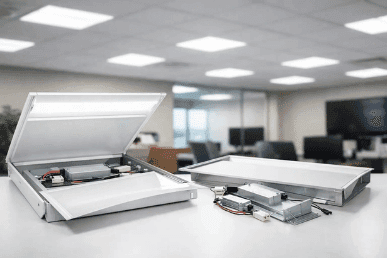
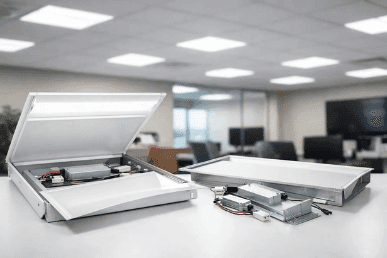
Most kits are designed to convert existing fluorescent troffers into integrated LED systems. Depending on the product, the kit may include an LED light engine or panel, driver, wiring components, and hardware for mounting inside the existing housing. Some also include a new center basket, door frame, or lens to refresh the finished look from below the ceiling line.
Not all kits are built the same way. Some are focused on fast field installation and basic on-off operation. Others are built for higher-end commercial work, with selectable wattage, selectable color temperature, 0-10V dimming, emergency backup compatibility, or sensor integration. If you are buying for a project rather than a single room, those details matter more than the sticker price.
How to choose the right LED troffer retrofit kits
The first step is matching the kit to the existing fixture size and configuration. The most common commercial troffer sizes are 2x2 and 2x4, but depth, reflector style, and housing condition can vary by site. A kit that fits one troffer family may not fit another cleanly, especially in older buildings.
Lumen output is the next major factor. Many buyers focus on wattage because that is what they are replacing, but the better approach is to evaluate delivered light. An office with standard ceiling heights may perform well with moderate lumen packages, while classrooms, healthcare areas, and retail spaces may need higher output or tighter visual consistency. Too little light creates complaints. Too much light can be just as problematic, especially where glare control matters.
Color temperature should be selected based on the application, not habit. A 3500K or 4000K range is common in commercial interiors because it provides a clean, neutral appearance without feeling overly cold. In some office and educational settings, that balance works well. In retail or utility areas, 5000K may be preferred for a brighter visual impression. The right answer depends on the space, the ceiling height, the finish materials, and the user expectations.
Driver quality is another point that should not be treated as optional. A lower-cost kit may look acceptable on paper but create problems with flicker, dimming compatibility, or long-term reliability. For facilities managers and procurement teams, one callback can erase the savings from buying the cheapest option.
Where retrofit kits work best
LED troffer retrofit kits are a strong fit for occupied commercial spaces where ceiling systems are staying in place and the goal is to modernize lighting with minimal disruption. Office buildings are a common example. Existing recessed troffers are everywhere, and many are still structurally usable even when the fluorescent lamps and ballasts are not.
Schools are another strong application, especially where maintenance teams want to reduce relamping cycles and improve classroom light quality during scheduled upgrades. Healthcare and administrative areas can also benefit, provided the selected kit meets the performance and visual requirements of the space.
Retail back-of-house areas, corridors, municipal buildings, and multi-site property portfolios are also good candidates. In these environments, repeatability matters. If a buyer can specify one reliable kit family across multiple locations, ordering and maintenance both become simpler.
When a full fixture replacement is better
Retrofit is not always the right answer. If the troffer housing is bent, rusted, or poorly secured, keeping it may create more work than replacing it. The same applies when the existing fixture layout no longer meets the lighting plan, when the ceiling grid is being redone anyway, or when a cleaner architectural appearance is part of the project scope.
There are also situations where modern flat panels or new troffers provide better optical control, easier controls integration, or a more updated aesthetic. If the project is a full renovation rather than a lighting-only upgrade, complete fixture replacement may deliver better long-term value.
That is why product selection should start with site conditions, not assumptions. A retrofit kit is a practical solution, but it is still a product match decision.
Performance features worth paying for
For commercial buyers, the best retrofit kit is rarely just the lowest-priced one in stock. It is the one that fits the application and reduces future headaches.
Selectable wattage can be useful when fixture conditions vary across a project or when field adjustments are needed to maintain visual consistency. Selectable color temperature adds flexibility for mixed-use properties or phased renovations. Dimming capability is important in offices, schools, and energy-managed facilities, especially where controls are already planned.
Lens and diffuser design also deserve attention. Light distribution affects more than brightness. It affects comfort, glare, and how finished the installation looks once the job is done. In spaces where occupants spend long hours under the fixtures, optical performance should not be overlooked.
Warranty support matters too. Commercial lighting buyers are not just sourcing a box. They are sourcing accountability. Premium-quality products backed by dependable warranty support tend to reduce risk over the life of the project.
Installation and procurement considerations
From a contractor standpoint, installation time is often where retrofit kits show their value. Working within the existing housing can simplify the process, but only if the kit is designed well and the fixture conditions are consistent. Poorly matched kits can slow down crews, create fit issues, and add rework.
That is why it helps to confirm fixture compatibility before ordering at scale. Photos, dimensions, and a quick review of the existing troffer type can prevent expensive delays. On larger jobs, it is often worth validating one area first before releasing the full order.
Procurement teams should also think beyond unit pricing. Lead times, case quantities, project staging, and consistency across multiple phases all affect the actual cost of the job. If you are sourcing for a school district, office portfolio, or multi-tenant property, stable product availability can be just as important as technical performance.
For bulk orders or project-based sourcing, working with lighting specialists can simplify specification, reduce mismatches, and help identify alternatives when a particular configuration is not ideal. That consultative step is often what keeps a retrofit project on schedule.
LED troffer retrofit kits and long-term value
The long-term case for LED troffer retrofit kits comes down to efficiency, maintenance, and control. Fluorescent systems age in ways that create steady friction - lamp failures, ballast replacements, inconsistent color, and uneven light levels across a facility. LED retrofit systems reduce that maintenance burden while bringing the space up to a more current lighting standard.
They also support better operational planning. Once a building moves to a consistent LED platform, future replacements, inventory planning, and maintenance scheduling get easier. That may not sound dramatic, but for facilities teams managing multiple sites, it saves time every month.
For buyers who need dependable commercial lighting without replacing every ceiling fixture from scratch, retrofit kits remain one of the most practical upgrade options available. If the existing housings are sound and the specifications are matched correctly, the result is a faster path to better light, lower operating costs, and a cleaner project overall.
If you are planning a retrofit across one building or an entire portfolio, take the time to evaluate fit, output, controls, and warranty support before placing the order. The right kit does more than convert a fixture. It makes the whole project easier to manage.