
Beacon Lighting Supply | Lighting the Way
If you are replacing fluorescent fixtures, planning an LED retrofit, or troubleshooting a failed control component, the LED driver vs ballast question is not academic - it affects compatibility, labor time, and long-term maintenance. Choosing the wrong one can lead to flicker, premature failure, wiring rework, or a fixture that simply will not operate.
For contractors, facility teams, and buyers managing real projects, the key point is simple. A ballast is designed to control fluorescent or HID lamps. An LED driver is designed to power LEDs. They are not interchangeable in the usual sense, even though both regulate electrical power inside a lighting system.
LED driver vs ballast: the core difference
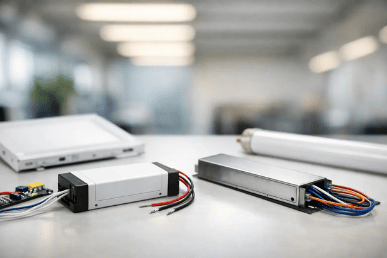
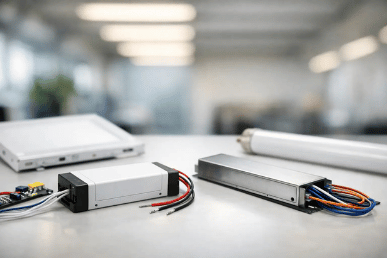
A ballast controls current for fluorescent or HID lamps, which cannot safely run straight from line voltage without some type of regulation. Traditional fluorescent ballasts also help start the lamp and then limit current during operation. Depending on the lamp type, the ballast may be magnetic or electronic, and it is selected around the lamp family, number of lamps, and operating characteristics.
An LED driver performs a different job for a different light source. LEDs require a controlled electrical input, usually constant current or constant voltage depending on the design of the fixture or lamp. The driver converts incoming power into the form the LED system needs. In most integrated LED fixtures, that driver is an essential part of the fixture, just as a ballast is essential to a fluorescent fixture.
So while people often compare them because both are control gear, they are built around different technologies. A ballast is for fluorescent or HID systems. A driver is for LED systems.
Why this matters on retrofit and replacement jobs
This distinction matters most when older fluorescent systems are being upgraded to LED. Many existing buildings still have troffers, strips, wraps, high bays, or wall-mounted fixtures built around fluorescent ballasts. When those fixtures are due for maintenance or energy upgrades, buyers usually face one of three paths.
The first is to replace the fluorescent ballast and keep the existing lamp system. That can make sense when a facility needs a quick repair, has usable fluorescent inventory on hand, or is not ready for a larger conversion.
The second is to install ballast-compatible LED lamps, often called Type A LED tubes. These are designed to work with certain existing fluorescent ballasts. This can reduce labor because the fixture wiring may stay largely intact, but compatibility has to be verified carefully. Not every LED lamp works with every ballast, and not every ballast is worth keeping in service.
The third is to bypass or remove the ballast and use direct-wire LED lamps or a full LED fixture replacement with a dedicated driver. In many commercial settings, this is the cleaner long-term solution because it removes an aging failure point and shifts the system to LED-native power control.
That is where confusion often starts. If an LED tube says it runs on a ballast, that does not mean the ballast has become an LED driver. It means the lamp contains electronics that allow it to operate with a compatible fluorescent ballast upstream. The ballast is still a ballast, and the lamp is doing extra work to adapt.
Ballast-compatible LED vs driver-based LED
Ballast-compatible LED products have their place. They can be useful when speed matters, when rewiring time is limited, or when a property owner wants minimal disruption during a lamp swap. In multi-site maintenance programs, they can also simplify short-term relamping if the installed ballast list is known and managed correctly.
The trade-off is that the ballast remains in the system. If that ballast is old, unreliable, or not on the LED lamp manufacturer’s compatibility list, you may still be dealing with nuisance failures. Energy savings can also be slightly reduced because the ballast consumes power.
Driver-based LED systems are usually found in integrated LED fixtures or retrofit kits designed specifically around LEDs. These systems are generally better aligned with long-term performance because the electrical design is built for the LED load from the start. You are not asking a fluorescent-era component to stay in service during an LED upgrade.
For large projects, especially in offices, warehouses, schools, retail spaces, and common-area property upgrades, this often leads to better maintenance planning. Instead of supporting mixed generations of gear, the facility moves toward a standardized LED platform.
When you still need a ballast
There are still valid reasons to source a ballast. If a fluorescent fixture remains in service and the goal is repair rather than conversion, replacing the ballast may be the most practical move. This is common when budgets are tight, replacement fixtures are delayed, or a short-term operational fix is needed.
Ballasts also remain relevant in certain legacy systems where lamp performance, fixture design, or occupant disruption make immediate LED conversion less attractive. Some specialized HID applications may also continue using ballast-based designs until a larger fixture replacement is planned.
That said, most buyers looking at frequent ballast failures should at least evaluate whether continued fluorescent maintenance is still cost-effective. Replacing one ballast may be reasonable. Replacing dozens across a facility often signals that a broader LED upgrade should be on the table.
When you need an LED driver
If you are installing an integrated LED fixture, an LED retrofit kit, or replacing a failed power supply in an LED luminaire, you need a driver matched to that LED system. This is where exact specifications matter. Voltage, current output, dimming protocol, wattage range, and environmental rating all need to line up with the fixture requirements.
In commercial and industrial settings, driver selection is not just about turning the light on. It affects dimming behavior, controls compatibility, thermal performance, and overall life expectancy. A poorly matched driver can create flicker, shorten LED life, or cause intermittent shutdowns that look like fixture failure.
This is especially important in high-bay, outdoor, vapor-tight, hazardous location, and other demanding applications where operating conditions are tougher and access for maintenance may be expensive.
Common mistakes in the LED driver vs ballast decision
One common mistake is assuming all LED tubes can replace fluorescent lamps without checking the existing ballast. Some can, some cannot, and some are dual-mode products that can operate in more than one wiring configuration. The lamp type has to match the fixture condition and the project plan.
Another mistake is treating ballast bypass as a simple lamp change. Once the ballast is removed or bypassed, the fixture has been rewired, and the replacement lamps must match that wiring method exactly. That work should be handled correctly and labeled clearly for future maintenance.
A third issue is replacing an LED driver with a near match instead of the correct match. Similar wattage does not guarantee proper operation. Driver output type and control compatibility matter just as much as basic power rating.
How to choose the right path
For a single failed fluorescent fixture, replacing the ballast may be enough if the rest of the system is in good condition and the facility is not ready to convert. For a property with repeated fluorescent maintenance, rising labor costs, or energy reduction targets, moving away from ballasts and into LED systems usually makes better financial sense.
If the priority is quick retrofit with minimal rewiring, ballast-compatible LED lamps may work, but only when compatibility is confirmed and existing ballasts are still dependable. If the priority is longer service life, simplified maintenance, and fewer legacy components, direct-wire LED lamps, retrofit kits, or complete LED fixtures with proper drivers are often the stronger option.
For procurement teams and contractors, the best decision usually comes down to fixture age, labor cost, downtime tolerance, and how standardized the site needs to be after the upgrade. A warehouse with lifts and limited maintenance windows has different priorities than a small office doing isolated repairs.
Get the electrical side right before you order
The LED driver vs ballast question is really a system question. You are not just buying a part - you are deciding how the fixture will operate, how it will be serviced later, and whether the upgrade path makes sense for the building. Taking a few extra minutes to confirm lamp type, fixture wiring, ballast condition, or driver specs can prevent costly returns and repeat labor.
For projects with mixed fixture types, large quantities, or specialized applications, it pays to work with a lighting supplier that can help sort through compatibility before materials hit the jobsite. That is often the difference between a clean rollout and a maintenance headache that keeps coming back. If you are weighing repair versus conversion, a knowledgeable supply partner can help narrow the right solution for the job and the budget.