Beacon Lighting Supply | Lighting the Way
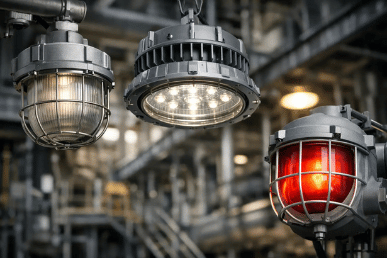
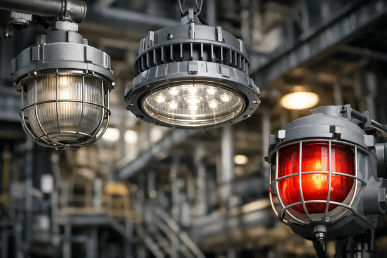
A fixture failure in a classified area is not a minor maintenance issue. In a refinery, grain facility, paint booth, or chemical plant, the wrong light can introduce risk, create downtime, and complicate inspections fast. That is why industrial hazardous lighting fixtures are specified with far more scrutiny than standard commercial products. Buyers are not just comparing brightness and price. They are evaluating safety ratings, housing construction, mounting options, maintenance demands, and long-term reliability in demanding operating conditions.
What makes a fixture hazardous-rated
A hazardous location fixture is designed for spaces where flammable gases, vapors, combustible dust, or ignitable fibers may be present. In these environments, lighting has to do more than illuminate the work area. It must contain or prevent ignition sources that could trigger an explosion or fire.
That requirement changes the entire fixture design. Housing materials are heavier-duty, seals are tighter, lens assemblies are built for impact and environmental protection, and internal components are selected to manage heat and electrical performance under harsh conditions. Ratings matter because inspectors, engineers, and safety teams need to verify that the fixture matches the classification of the space.
In practical terms, the right specification starts with the hazard itself. Gas and vapor locations are not evaluated the same way as dust-heavy sites. Temperature limits also matter. A fixture may be suitable for one classified area but not another, even when the physical footprint looks identical.
Industrial hazardous lighting fixtures and area classification
Before fixture style, lumen package, or color temperature enters the discussion, the job starts with classification. This is where many purchasing delays happen, especially during retrofit projects where older fixtures may have incomplete labeling or outdated documentation.
In the US, hazardous locations are commonly identified by class, division, and group, or by class and zone, depending on the application and code framework. For buyers and contractors, the key point is straightforward: the fixture rating must match the environment.
Class I generally refers to flammable gases and vapors. Class II covers combustible dust. Class III applies to ignitable fibers and flyings. Divisions or zones further define how likely the hazardous material is to be present during normal operation or abnormal conditions.
This is where product selection becomes highly practical. A facility with occasional vapor exposure may need a different fixture than a continuously hazardous processing area. A grain application with airborne dust has different demands than a wastewater site exposed to corrosive moisture and gas. There is no one-size-fits-all answer, and trying to generalize can create compliance problems.
Fixture construction matters as much as the rating
A compliant label is only part of the story. In industrial settings, fixture construction drives service life, maintenance frequency, and total operating cost.
Die-cast aluminum housings are common because they offer strength and heat management. Corrosion-resistant finishes are important in coastal, chemical, and washdown environments. Tempered glass lenses and gasketed enclosures help protect against impact, dust intrusion, and moisture. In some applications, marine-grade or specialized anti-corrosion materials are worth the added upfront cost because they reduce premature replacement.
Mounting also deserves attention early. Pendant, ceiling, wall, stanchion, and yoke mounts all serve different site conditions. A fixture may be electrically correct for the area but mechanically awkward for the installation point. That usually means extra labor, field modifications, or poor light distribution.
For maintenance teams, access to drivers or internal components can be another deciding factor. Some enclosed hazardous fixtures are built to minimize tampering and maximize protection, but that can make servicing slower. In high-use industrial facilities, serviceability is not a small issue. It affects lift time, labor planning, and shutdown windows.
Why LED has become the standard
Most buyers looking at industrial hazardous lighting fixtures today are choosing LED, and for good reason. Older HID technologies still exist in some facilities, but they create more maintenance burden, slower startup, and higher energy use.
LED hazardous fixtures offer longer rated life, improved visibility, and better optical control. That matters in process areas, walkways, loading zones, and inspection points where clear illumination supports safety and productivity. Instant-on performance is another advantage, especially in sites where power interruptions or switching cycles are common.
There is still a trade-off to consider. Not every LED fixture performs equally in extreme ambient conditions. Heat management, driver quality, and thermal design matter. A lower-cost fixture may look comparable on paper, but in hot industrial environments, weak component quality tends to show up early. That is why many specifiers focus on overall build quality and warranty support, not just wattage replacement claims.
Choosing the right light output and optics
Brighter is not automatically better in hazardous areas. Overlighting can create glare, especially around metal surfaces, tanks, and equipment. Underlighting creates its own problems, including poor visibility, slower inspections, and increased risk during service work.
The right output depends on ceiling height, task type, mounting layout, and whether the fixture is intended for general area lighting or a more focused application. High-bay hazardous fixtures are common in large industrial buildings with elevated mounting heights. Linear hazardous fixtures often fit corridors, processing lines, and utility spaces. Flood-style hazardous fixtures are useful outdoors or in targeted work zones.
Optics should match the space. Wide distribution can reduce fixture count in open areas, while narrower beams help direct light where it is needed without wasting output. Color temperature is usually selected for visual clarity rather than appearance. Many industrial users prefer neutral to cool white light because it supports visibility and task recognition, but exact preference can depend on the facility.
Environmental exposure changes the buying decision
Hazard classification is critical, but environmental abuse often determines how well the fixture holds up over time. Many industrial spaces combine multiple stress factors at once - vibration, washdown, corrosive chemicals, hose-directed water, dust buildup, and temperature swings.
That is why ingress protection, impact resistance, and finish quality should be reviewed alongside hazardous location certification. A fixture installed in a food processing area may need a different housing and lens combination than one installed in a fuel storage site. A wastewater application may call for stronger corrosion resistance than an indoor manufacturing room with the same electrical classification.
For retrofit buyers, this is where replacing like-for-like can become a mistake. The old fixture may have survived despite the environment, not because it was the best fit for it. An updated LED solution should be selected based on current conditions, not just old naming conventions or mounting habits.
Procurement mistakes that cost time later
Most problems in hazardous lighting projects do not start at installation. They start with specification and purchasing.
One common issue is assuming that all hazardous fixtures are interchangeable if they share a similar shape. They are not. Certification, temperature code, voltage compatibility, mounting, and environment ratings all need to align. Another issue is buying only on fixture price while ignoring labor access, lead times, and replacement consistency across the site.
For larger projects, standardization usually saves money over time. Using too many fixture variations can complicate stocking, maintenance training, and future expansion. On the other hand, forcing one model across every area can lead to compromises. The best approach is usually a controlled fixture family strategy - enough consistency to simplify procurement, with enough flexibility to fit each application correctly.
This is also where specialist support matters. Contractors and procurement teams often need help confirming equivalent replacements, reviewing submittal details, or lining up volume pricing for phased projects. A supplier with category depth and technical guidance can remove a lot of friction from that process.
When to replace instead of repair
In older hazardous installations, repair may seem cheaper at first. But if housings are corroded, lenses are degraded, or legacy lamp and ballast components are becoming hard to source, repair can turn into repeat labor without solving the bigger issue.
Replacement often makes more sense when energy savings, reduced maintenance, and improved light quality are part of the calculation. It also helps standardize inventory and simplify future service. For facilities managing multiple buildings or ongoing upgrades, moving to a consistent LED hazardous platform can make budgeting and maintenance far more predictable.
Beacon Lighting Supply works with contractors, maintenance teams, and commercial buyers who need that kind of project-ready support, especially when fixture selection has to balance code requirements, durability, and purchasing efficiency.
Getting industrial hazardous lighting fixtures right
The right fixture is the one that matches the classified area, survives the environment, and supports the work happening under it without creating service headaches later. That usually means asking a few more questions upfront about classification, mounting, ambient conditions, voltage, and maintenance goals.
If you are sourcing for a retrofit, expansion, or new industrial build, it pays to slow down at the specification stage. A well-matched hazardous fixture protects more than the space. It protects uptime, labor, and confidence in the installation long after the order is placed.