Beacon Lighting Supply | Lighting the Way
A fixture that works perfectly in a warehouse aisle can be the wrong choice the moment flammable gas, combustible dust, or ignitable fibers enter the space. That is where a hazardous location lighting guide becomes essential - not as a spec sheet exercise, but as a safety and compliance decision that affects uptime, maintenance, and risk.
For contractors, plant managers, maintenance teams, and procurement buyers, the challenge is rarely just finding a bright fixture. The real job is matching the lighting to the hazard classification, the mounting conditions, the operating environment, and the maintenance plan. If one of those pieces is off, the fixture may be unsuitable even if it looks durable on paper.
What hazardous location lighting actually means
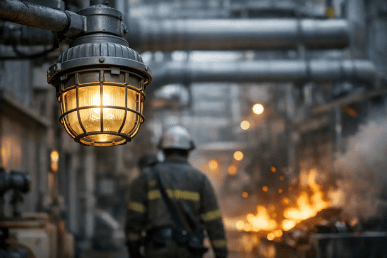
Hazardous location lighting is designed for areas where fire or explosion risks exist because of flammable vapors, gases, combustible dust, or ignitable fibers and flyings. These environments are common in oil and gas facilities, chemical plants, grain processing, wastewater sites, paint areas, fuel storage, manufacturing spaces, and certain maintenance zones.
The fixture itself is not making the area safe. It is built and rated so it can operate in that environment without becoming an ignition source when installed correctly. That distinction matters because buyers sometimes assume a heavy-duty or vapor-tight fixture is automatically acceptable in a classified area. It is not.
A vapor-proof fixture may help in wet or dirty conditions, but hazardous location requirements are different. In many cases, a fixture needs a specific hazardous location rating tied to the exact risk present in the space.
Hazardous location lighting guide to classes and divisions
The first step in any hazardous location lighting guide is understanding the classification of the area. Lighting selection starts there, not with wattage, lumen output, or fixture shape.
Class I, Class II, and Class III
Class I locations involve flammable gases or vapors. Think petroleum facilities, spray finishing areas, or chemical processing spaces. These are some of the most sensitive applications because vapors can ignite under the right conditions.
Class II locations involve combustible dust. Grain elevators, flour mills, feed plants, and some manufacturing sites fall into this category. Dust can accumulate inside and around equipment, and under certain conditions it can ignite or explode.
Class III locations involve ignitable fibers and flyings, such as textile mills, woodworking operations, or similar facilities where larger particles are present. These materials behave differently than dust or vapor, so the protection approach also differs.
Division 1 vs. Division 2
Division tells you how likely the hazardous substance is to be present during normal operation.
Division 1 means the hazard is present under normal operating conditions, or may frequently exist due to maintenance, repair, or equipment failure. These spaces need a higher level of protection because the risk is expected rather than occasional.
Division 2 means the hazard is not normally present in everyday operation, but could appear under abnormal conditions such as a leak, spill, or system malfunction. Fixtures for Division 2 applications may have different design allowances, but they still need the correct listing for that environment.
This is where errors happen. A buyer may know the site is a Class I area but stop there. The division matters just as much, and the wrong assumption can lead to an unsuitable fixture submittal.
Why fixture ratings are not interchangeable
One of the most common purchasing mistakes is treating industrial ratings as if they overlap. They do not always.
A fixture can be wet-location rated and still not be approved for a hazardous area. It can have a high IP rating and still not meet the required hazardous classification. It can be rugged, gasketed, corrosion-resistant, and LED - and still be the wrong product.
That is because hazardous location lighting is tied to certified use conditions. The listing needs to match the classified environment. If your application calls for Class I, Division 2, that rating is not optional. It is the baseline requirement.
Temperature also matters. In hazardous environments, fixture surface temperature can be part of the risk profile. If a fixture runs too hot for the materials present, that becomes a problem even when the housing itself is well built. This is one reason LED upgrades are often attractive in these spaces. Lower maintenance and long life are part of the value, but controlled thermal performance can also support safer operation when the product is properly specified.
Choosing the right fixture for the job
Once the classification is confirmed, fixture selection becomes more practical. At that stage, buyers should look at mounting style, light distribution, operating temperature, ingress protection, and service life.
High bay hazardous location fixtures are common in larger industrial interiors with higher mounting heights. These are often used in processing plants, manufacturing areas, and utility spaces where broad, powerful illumination is needed. The right optic matters here. Too narrow and you create uneven coverage. Too wide and you may waste output or increase glare.
Linear hazardous location fixtures are often a better fit in corridors, catwalks, service areas, or tighter industrial layouts. They can provide more uniform light over long runs and may simplify replacement planning where existing linear formats are already in place.
Flood and wall-mounted hazardous location fixtures are frequently used outdoors or at building perimeters, loading zones, tank areas, and access points. In these applications, weather exposure joins the hazard classification as a selection factor. Corrosion resistance, seal integrity, and reliable cold or hot weather performance become part of the decision.
Emergency and egress lighting deserve separate attention. If a hazardous area requires emergency illumination, the product needs to satisfy both the emergency function and the area classification. This is not the place to retrofit a general-purpose emergency unit and hope it passes review.
LED retrofit vs. full fixture replacement
For many facilities, the budget conversation comes down to retrofit or full replacement. The answer depends on the existing system, the classification requirements, and how much risk you want to carry forward.
If the current fixture housing is aging, difficult to service, or no longer aligns with the site standard, full replacement is usually the cleaner path. It can reduce maintenance complexity, improve efficiency, and provide a clearer compliance position for future inspections and expansions.
Retrofit options can make sense in selective cases, especially where a compatible, properly rated path exists and the housing is still serviceable. But hazardous environments are not ideal places for improvised upgrades. If the retrofit introduces uncertainty around listing, thermal performance, or long-term reliability, the upfront savings may disappear quickly.
For procurement teams managing larger rollouts, standardization often matters more than squeezing the lowest initial unit cost out of every fixture. Fewer fixture types can simplify stocking, maintenance, and replacement planning across the site.
Questions to answer before you place the order
A good hazardous location lighting guide should help you narrow the spec before the quote stage. Start with the area classification identified by the engineer, AHJ, or facility documentation. Then confirm mounting height, voltage, ambient temperature, expected exposure to moisture or corrosion, and whether the space needs normal, emergency, or task lighting.
It also helps to ask how the fixture will be serviced. Some products are easier to access, clean, and replace than others. In a hazardous area, maintenance labor is not a small detail. If the fixture is mounted high, requires shutdown coordination, or sits in a difficult process zone, a longer-life product can justify a higher initial cost.
Lead time and project scale matter too. A single replacement order and a multi-building conversion are different procurement jobs. For larger projects, buyers usually benefit from working with a lighting specialist who can confirm compatibility, reduce spec risk, and help organize bulk purchasing.
Common buying mistakes to avoid
The biggest mistake is ordering by appearance instead of by rating. Hazardous location fixtures often look similar to other industrial products, especially online. That visual overlap causes problems when teams move too fast.
The second mistake is relying on old fixture schedules without checking current site conditions. Facilities evolve. Process changes, storage changes, and code reviews can alter what the space requires.
Another issue is underestimating environmental stress. A fixture may meet the hazardous classification but still perform poorly if the application includes extreme heat, washdown exposure, corrosive agents, or constant vibration. Hazard rating is essential, but it is not the only specification that matters.
If you are sourcing for multiple areas with different classifications, keep those zones clearly separated in the purchasing process. One mixed order with similar-looking fixtures can create installation errors that are expensive to correct later.
Getting hazardous location lighting right the first time
The best hazardous location lighting decisions start with accurate classification data and end with a fixture that fits the real operating environment, not just the minimum checklist. That means balancing safety, compliance, light performance, service life, and purchasing efficiency.
For buyers managing replacements, upgrades, or larger industrial projects, it pays to work with a supplier that understands fixture ratings, application differences, and volume planning. Beacon Lighting Supply supports contractors, facilities, and procurement teams with hazardous location lighting options that are built for demanding environments and backed by specialist guidance when the spec needs a closer look.
When the area is classified, the right fixture is not a guess. It is a job-critical choice, and getting it right upfront saves time, callbacks, and unnecessary risk.