Beacon Lighting Supply | Lighting the Way
A failed fixture in a classified area is not a routine maintenance issue. It can stop production, delay inspections, create safety exposure, and turn a simple relamp into a tightly controlled job. That is why hazardous location LED lighting is less about chasing efficiency claims and more about choosing fixtures that can perform reliably where gas, vapor, dust, or fibers change the risk profile of the space.
For contractors, plant managers, and procurement teams, the challenge is rarely finding any LED fixture. The real job is matching the right fixture to the classification, mounting condition, operating temperature, and maintenance expectations of the site. When those details are handled correctly, LED becomes a practical long-term upgrade. When they are not, the fixture may be the wrong fit before it is ever energized.
What hazardous location LED lighting is meant to solve
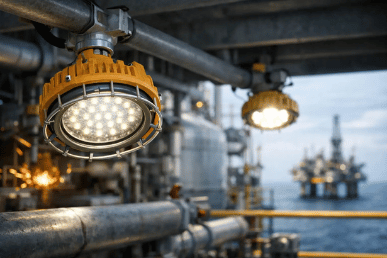
Hazardous location fixtures are designed for environments where ignitable substances may be present under normal operation or under abnormal conditions. That includes oil and gas facilities, chemical plants, grain processing areas, wastewater sites, paint operations, manufacturing spaces with combustible dust, and similar industrial settings.
In these applications, lighting selection starts with safety and code compliance. Illumination level, energy savings, and fixture appearance matter, but they come after the classification requirements. A hazardous location LED fixture is built to operate without becoming an ignition source within the conditions it is rated for. That often means specialized housings, sealed construction, thermal management, impact resistance, and certification for the intended environment.
LED technology also addresses several common operating headaches in these spaces. It reduces frequent lamp replacement, helps minimize maintenance trips into controlled areas, and generally offers better life expectancy than older HID or fluorescent systems. That matters when servicing the fixture requires shutdown coordination, lift access, permits, or safety escorts.
Start with classification, not wattage
The most common mistake in hazardous area lighting is comparing fixtures by lumen output or price before confirming the site classification. In a standard commercial space, that approach may only create a performance issue. In a hazardous location, it can create a compliance issue.
You need to confirm whether the area is classified by Class and Division or by Class and Zone, and whether the hazard involves gases, vapors, dusts, or fibers. You also need to verify the group rating and temperature code required for the application. These details determine whether a fixture is acceptable for the space.
A fixture can be well built and still be wrong for the job. For example, a unit suitable for one classified gas environment may not be acceptable in a combustible dust application. Likewise, a fixture approved for less demanding conditions may not belong in an area where the hazard is present during normal operations.
This is why project teams should work from the area classification documents first, then narrow fixture options from there. It saves time and avoids the expensive cycle of ordering, reviewing submittals, and replacing non-compliant products late in the process.
Where LED makes a measurable difference
The strongest case for hazardous location LED lighting usually shows up after installation, not on the cut sheet. Facilities that move away from legacy HID or fluorescent fixtures often see the biggest benefit in maintenance planning.
LED fixtures typically offer longer service life, better resistance to vibration, and more stable light output over time. In industrial environments with difficult access, those gains can be more valuable than raw energy reduction. If a maintenance team can avoid repeated relamping in a classified area, the savings extend beyond labor. There is less disruption to operations, fewer safety procedures to coordinate, and less risk tied to routine fixture service.
Light quality also improves jobsite visibility. LED fixtures generally provide better uniformity and faster full-output performance than older HID sources. In active industrial spaces, consistent visibility supports safer movement, inspection work, and task accuracy.
That said, not every LED upgrade delivers the same result. Fixture quality, thermal design, driver reliability, and lens performance matter. A lower-cost product may look competitive on paper, but if it struggles with heat, moisture, corrosive conditions, or voltage fluctuations, the savings disappear quickly.
Key specification points that deserve closer attention
Once the classification is confirmed, several practical details should drive fixture selection. Mounting style is one of the first. Ceiling, pendant, wall, stanchion, and flood configurations all serve different site conditions, and the right mounting option affects both performance and installation labor.
Housing material is also important. In corrosive or washdown-prone environments, fixture body construction can have a direct impact on service life. A unit that performs well in a dry indoor process area may not hold up the same way in a coastal, chemical, or wastewater setting.
Temperature range should be reviewed carefully. Ambient conditions can make or break LED performance, especially in facilities with high process heat or cold outdoor exposure. The fixture must be rated for the actual operating environment, not just the nominal building condition.
Ingress protection and sealing are equally relevant. Dust, moisture, and airborne contaminants affect optics, electronics, and long-term reliability. In many industrial spaces, a sealed fixture is not a nice feature. It is a basic requirement.
It is also worth checking voltage compatibility, surge protection, lumen package, color temperature, and photometric distribution. Wide distribution may be ideal in some open areas, while tighter control may work better for perimeter lighting, vertical surfaces, or task-focused zones.
Retrofit or full fixture replacement
Some projects begin with a simple goal: replace older lamps with LED. In hazardous areas, that decision needs more scrutiny than a standard commercial retrofit.
Retrofit kits can work in certain conditions, but they are not automatically the best option. Existing housings may be aged, corroded, or poorly suited for the new light source. The labor required to adapt old equipment can also reduce the apparent cost savings. In many cases, a complete fixture replacement gives the facility a cleaner path to updated performance, certification confidence, and longer-term reliability.
There are times when retrofit still makes sense, especially if the installed base is in good condition and the project requires minimizing structural changes. But the decision should account for total installed cost, downtime, condition of existing fixtures, and the need for future maintenance support.
Why procurement teams should think beyond unit price
In hazardous location projects, a low fixture price can be misleading. Lead times, documentation quality, warranty support, and product consistency matter just as much as initial cost. If a supplier cannot help verify ratings, organize fixture schedules, or support volume purchasing across a project, the hidden cost shows up later in delays and change orders.
For larger jobs, standardization matters too. Using too many fixture types across similar areas can complicate spare inventory, maintenance training, and replacement planning. A more disciplined specification strategy often pays off long after the installation is complete.
This is where working with a supply partner that understands project requirements can make the buying process faster and more accurate. Beacon Lighting Supply supports customers who need hazardous and industrial lighting solutions with product guidance, bulk order support, and access to lighting specialists who can help narrow down the right options for the application.
Common buying mistakes to avoid with hazardous location LED lighting
One of the most frequent issues is assuming all sealed industrial fixtures are suitable for hazardous spaces. Vapor-tight or heavy-duty industrial lighting may be durable, but that does not make it hazardous location rated.
Another mistake is overlooking environmental conditions that sit outside the classification itself. Corrosion, hose-down cleaning, high ambient heat, and power quality problems can shorten fixture life even when the classification is correct.
Buyers also run into trouble when they treat hazardous area lighting as a late-stage commodity purchase. These fixtures should be selected early enough to coordinate mounting, conduit layout, controls strategy where applicable, and any submittal review needed for the project.
Choosing the right path for the site
The best hazardous location lighting plan is usually the one that balances compliance, durability, and maintenance realities without overcomplicating procurement. Some sites need heavy-duty high bays with broad area coverage. Others need compact wallpacks, flood fixtures, or low-profile luminaires built for tight process spaces. The right answer depends on the classification, the physical environment, and how the facility operates day to day.
If you are sourcing hazardous location LED lighting, start with the site documents, confirm the environmental demands, and choose fixtures that will reduce service calls rather than create them. A good fixture does more than light the area. It supports uptime, simplifies maintenance, and gives your team more confidence in a space where getting the specification wrong is not a minor issue.