
Beacon Lighting Supply | Lighting the Way
A lighting upgrade can miss the mark if the fixtures are efficient, but the controls are an afterthought. In most commercial spaces, commercial lighting controls determine whether a system actually saves energy, supports occupant comfort, and stays manageable for the people who have to maintain it.
That matters on real job sites. A warehouse may need high bays that switch reliably by aisle and occupancy. An office may need dimming and daylight response without creating complaints from tenants. A retail space may want scene control in one area and basic scheduling in another. The control strategy should match the building, the operating hours, and the maintenance reality.
What commercial lighting controls actually do
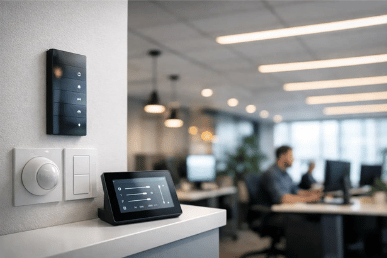
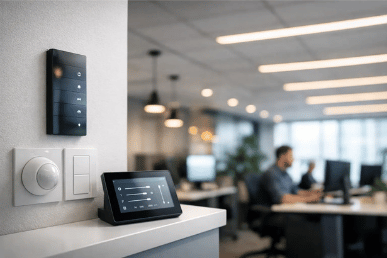
At a basic level, commercial lighting controls decide when lights turn on, when they dim, and how different zones respond to occupancy, daylight, or time schedules. That can be as simple as a wall switch with occupancy sensing or as advanced as a networked system tied into broader building operations.
The practical goal is straightforward. Lights should run when and where they are needed, and not when they are not. Good controls also help standardize performance across a facility, reduce lamp and driver stress in some applications, and support code compliance for new construction and retrofit work.
For contractors and facility teams, the bigger issue is not whether controls are useful. It is choosing the right level of control without creating unnecessary complexity. More features are not always better if the end user will never adjust them or if programming support becomes a recurring service call.
The main types of commercial lighting controls
Most projects use a mix of control methods rather than a single device type. The best combinations depend on building use, occupancy patterns, and how much flexibility the customer needs after installation.
Occupancy and vacancy sensors
These are often the fastest way to reduce waste in restrooms, offices, storage rooms, corridors, and back-of-house spaces. Occupancy sensors turn lights on automatically when movement is detected. Vacancy sensors require manual-on and automatic-off operation, which can reduce unnecessary runtime even more in some settings.
The trade-off is placement and sensitivity. A poorly located sensor can leave lights on too long or turn them off when a room still looks occupied. Private offices, conference rooms, and warehouse aisles all behave differently, so sensor coverage should be selected for the actual layout rather than the catalog photo.
Time scheduling controls
Schedules are useful when operating hours are predictable. Schools, offices, retail stores, parking lots, and exterior lighting systems often benefit from clocks, timers, or programmable control panels that align lighting operation with business hours.
Scheduling works well for broad control, but it is less responsive to exceptions. If a tenant works late or a cleaning crew arrives outside normal hours, the system should still allow local override without confusing staff. That is where a simple user interface matters more than a long feature list.
Daylight harvesting controls
In spaces with good natural light, photocells and daylight sensors can dim or switch lighting based on available daylight. This is common in perimeter offices, classrooms, atriums, and some retail environments.
Done well, daylight harvesting can trim energy use without drawing attention. Done poorly, it creates visible fluctuation that occupants notice immediately. Sensor calibration, zoning, and fixture dimming compatibility are critical here. The fixtures, drivers, and controls all need to speak the same language.
Dimmers and scene controls
Dimming is no longer limited to conference rooms and hospitality spaces. It can improve comfort in offices, healthcare settings, restaurants, and presentation areas while supporting lower energy use.
Scene control adds another layer by allowing preset light levels for different activities. A showroom may want one scene for open hours and another for cleaning or restocking. The important question is whether staff will actually use those presets. If not, a simpler setup may be the smarter buy.
Networked lighting control systems
Networked systems provide centralized monitoring, programming, zoning changes, and in some cases energy reporting. These systems make sense in larger facilities, multi-site portfolios, and properties where space use changes often.
They also come with higher planning requirements. Commissioning, device compatibility, IT coordination, and future service access all need to be considered early. For some projects, that investment pays off quickly. For others, a room-based or standalone control approach is more practical and easier to maintain.
Where controls matter most by application
Not every area in a building needs the same level of control. Matching the control package to the application keeps projects cost-effective and easier to support.
In offices, occupancy sensing, scheduling, and daylight dimming usually provide the biggest return. Open offices benefit from zoning that reflects actual work areas instead of broad floor-wide switching. Private offices and conference rooms often need local control that users can understand without training.
In warehouses and industrial spaces, high ceiling heights and aisle layouts change the sensor conversation. High-bay occupancy sensors, aisle-based zoning, and scheduled shutoff can make a real difference, especially in facilities with intermittent traffic. In active industrial environments, durability and mounting method matter just as much as control features.
Retail settings often need a balance between presentation and efficiency. Sales floors may need stable light levels during open hours, while stockrooms, fitting rooms, and back-of-house spaces are strong candidates for sensor-based control. Exterior wallpacks, signage, and parking area lighting usually benefit from photocells and schedules working together.
Schools, healthcare facilities, and public buildings often have stricter code and user-experience demands. Manual overrides, partial-on requirements, and multi-level control may all come into play. In these projects, product selection should follow both code and the day-to-day reality of how the space is used.
What to check before you buy
The most common control problems start before anything is installed. A fixture may be dimmable, but not with the selected control protocol. A sensor may cover the room on paper, but not around partitions, shelving, or equipment. A panel may be expandable, but not in a way that makes financial sense for the next phase of the project.
Start with compatibility. Confirm voltage, control type, driver requirements, and whether the fixtures support the intended dimming or switching method. If the project includes LED retrofits, check how the new drivers behave with existing controls rather than assuming they will work together.
Next, consider the people using the system. Maintenance teams usually want reliability and simple replacement paths. Property managers want fewer complaints and predictable operation. Contractors want products that install cleanly and commission without guesswork. Procurement teams want consistency across locations and fewer special-order surprises. The right control package should answer all four concerns, not just the spec sheet.
It also helps to think about serviceability. If a device fails, can the site replace it without bringing in a specialist for every adjustment? If schedules need to change seasonally, is the interface clear enough for onsite staff? Control systems should reduce labor over time, not create a permanent dependency.
Code compliance is part of the conversation
Energy codes have made commercial lighting controls a standard part of many projects, not an optional add-on. Requirements vary by jurisdiction, building type, and scope of work, but occupancy control, scheduling, daylight-responsive control, and shutoff provisions are common issues in both new construction and retrofit applications.
That does not mean every project needs the most advanced system available. It means the control approach should be selected with code in mind from the start. Waiting until the submittal or inspection stage usually leads to rushed substitutions, higher costs, and preventable delays.
For multi-location buyers, standardizing around control families that can meet common compliance requirements across different sites can simplify purchasing and maintenance. It also makes future expansion easier when the next store, office, or facility upgrade is already on the calendar.
Why product support matters with commercial lighting controls
Commercial lighting controls sit at the intersection of fixtures, sensors, drivers, scheduling, and user expectations. That is why product support matters. A project can look fine on a line-item quote and still run into trouble if device compatibility, zoning, or programming needs were not addressed early.
For many buyers, the value is not just in sourcing the control devices themselves. It is in getting matched products, practical guidance, and a purchasing path that supports the size of the job. On larger orders, working with lighting specialists can help reduce substitutions, avoid mismatched components, and identify volume discount opportunities. That is especially useful when the project includes multiple fixture types, phased installation, or retrofit constraints.
A good control plan does not need to be flashy. It needs to be dependable, understandable, and suited to the building it serves. If you are planning a new installation, retrofit, or multi-site purchase, take the time to match the controls to the actual operating needs of the space - and if the project has moving parts, bring in a supply partner that can help you get the specification right before the order is placed.