
Beacon Lighting Supply | Lighting the Way
Understanding LED Lifespan: L70, L80, and L90 Explained
LED lighting has transformed the way we illuminate commercial, industrial, and residential spaces. Known for their efficiency, durability, and long life, LEDs are often marketed with impressive lifespan claims like “50,000 hours” or more. But what do these numbers actually mean? And how do terms like L70, L80, and L90 factor into real-world performance?
If you’ve ever been confused by LED lifespan ratings, you’re not alone. This guide breaks down these key metrics in a clear, practical way—so you can make smarter lighting decisions for your projects.
What Does “LED Lifespan” Really Mean?
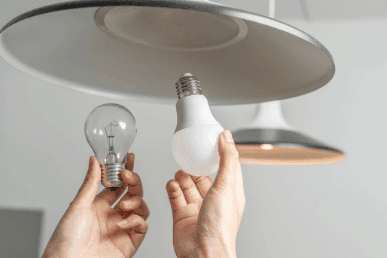
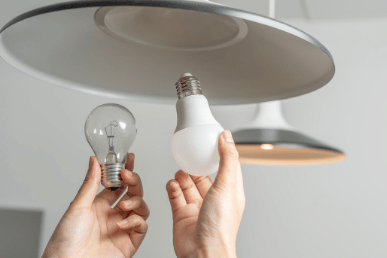
Unlike traditional lighting (like incandescent or fluorescent bulbs), LEDs don’t usually “burn out” suddenly. Instead, they gradually lose brightness over time, a process known as lumen depreciation.
So when manufacturers talk about LED lifespan, they’re not referring to when the light stops working entirely—they’re referring to how long it maintains a usable level of brightness.
That’s where L-ratings come in.
What Are L70, L80, and L90?
L-ratings measure how much light output an LED retains over time.
- L70 = the point when the LED has dropped to 70% of its original brightness
- L80 = the point when it reaches 80% of original brightness
- L90 = the point when it reaches 90% of original brightness
Example:
If an LED fixture starts at 10,000 lumens:
- At L90, it still produces 9,000 lumens
- At L80, it produces 8,000 lumens
- At L70, it produces 7,000 lumens
Manufacturers will pair these ratings with hours, such as:
- L70 @ 50,000 hours
- L80 @ 40,000 hours
This tells you how long the fixture maintains a certain level of brightness.
Why L70 Is the Industry Standard
You’ll most commonly see L70 used when discussing LED lifespan—and for good reason.
At 70% brightness:
- The light is still functional for most applications
- The reduction is noticeable but often acceptable
- It represents a realistic “end of useful life” for many environments
For general lighting (warehouses, parking garages, offices), L70 is typically the benchmark used in planning and ROI calculations.
When L80 or L90 Matters More
While L70 is common, L80 and L90 are increasingly important in high-performance environments where light quality and consistency are critical.
Choose L90 if:
- You need very consistent brightness over time
- You’re lighting retail spaces, showrooms, or healthcare environments
- Visual accuracy and appearance are crucial
Choose L80 if:
- You want a balance between longevity and performance
- You’re working in commercial or institutional settings
Stick with L70 if:
- You’re focused on cost-efficiency and long-term value
- The application is industrial or utility-based
How LED Lifespan Is Tested
LED lifespan ratings aren’t guesses—they’re based on standardized testing methods, primarily:
LM-80 Testing
- Measures lumen depreciation over time
- Conducted on LED chips or modules
- Typically runs for 6,000 to 10,000 hours
TM-21 Extrapolation
- Uses LM-80 data to project long-term performance
- Extends results to estimate 50,000+ hours
This combination allows manufacturers to provide realistic lifespan projections—but it’s important to remember these are still projections, not guarantees.
Factors That Affect Real-World Lifespan
Even if a fixture is rated L70 @ 50,000 hours, actual performance depends heavily on the environment and installation.
Key factors include:
1. Heat (Thermal Management)
- Excess heat is the #1 enemy of LED longevity
- Poor ventilation or enclosed fixtures can shorten lifespan
2. Driver Quality
- The LED driver (power supply) often fails before the LED chips
- A high-quality driver is just as important as the LEDs themselves
3. Operating Conditions
- High ambient temperatures
- Frequent switching on/off
- Voltage fluctuations
4. Fixture Design
- Better heat sinks = longer life
- Cheap fixtures often cut corners here
Why LED Lifespan Ratings Matter for Your Business
Understanding L70, L80, and L90 isn’t just technical—it directly impacts your bottom line.
1. Maintenance Planning
Knowing when light levels will drop helps you schedule replacements proactively.
2. Energy Efficiency Over Time
As LEDs dim, you may need more fixtures or higher output to maintain lighting levels.
3. ROI Calculations
A fixture with a higher upfront cost but better L80/L90 performance may save money long-term.
4. Lighting Quality
Inconsistent brightness can affect safety, productivity, and customer experience.
Common Misconceptions About LED Lifespan
“LEDs last forever”
Not quite—they degrade over time, even if they don’t fail outright.
“50,000 hours means full brightness the whole time”
No—it usually means L70 at 50,000 hours, not 100% output.
“All LEDs are the same”
Quality varies widely based on components, design, and manufacturing standards.
How to Choose the Right Lifespan Rating
When selecting LED lighting, ask these questions:
- What level of brightness loss is acceptable?
- How critical is lighting consistency?
- What are the maintenance costs of replacing fixtures?
- What environment will the lights operate in?
Quick Guide:
- Industrial / Warehouses / Parking Garages → L70 is typically sufficient
- Offices / Schools / Commercial → Consider L80
- Retail / Healthcare / High-end applications → Aim for L90
Final Thoughts
LED lifespan ratings like L70, L80, and L90 give you a much more accurate picture of performance than a simple “hours” claim. They help you understand not just how long a light will last—but how well it will perform over time.
When evaluating LED lighting, don’t just look at the headline lifespan. Dig deeper into the L-rating, thermal design, and component quality. That’s where the real value lies.
Choosing the right LED solution isn’t just about efficiency—it’s about consistent, reliable light for years to come.