Beacon Lighting Supply | Lighting the Way
What Are LED Corn Bulbs? When to Use Them for HID Retrofits
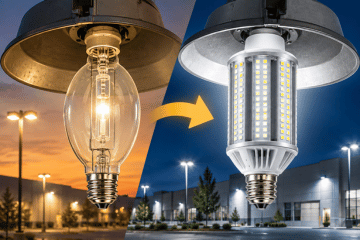
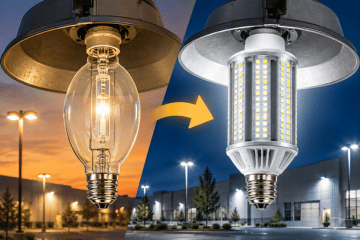
If your facility still relies on metal halide, high-pressure sodium, or other HID lighting, upgrading to LED does not always mean replacing the entire fixture. In many applications, an LED corn bulb can provide a practical way to convert an existing HID fixture to LED while keeping much of the original fixture in place.
LED corn bulbs—also called LED corn lamps or LED HID replacement lamps—are commonly used in commercial and industrial lighting retrofits. They are available in a wide range of wattages and lumen outputs and can be used in applications such as parking lots, warehouses, wall packs, post-top fixtures, canopies, and other HID fixtures.
But what exactly is an LED corn bulb, and when does it make more sense than replacing the entire fixture?
In this guide, we'll explain how LED corn bulbs work, where they're commonly used, and what to consider before using one for an HID retrofit.
What Is an LED Corn Bulb?
An LED corn bulb is a high-output LED lamp designed with rows of small LED chips arranged around its body. The pattern resembles kernels on an ear of corn, which is where the name comes from.
Unlike a directional LED fixture that concentrates most of its light in a particular direction, many corn lamps produce light around much of the lamp. This makes them particularly useful for retrofitting fixtures that were originally designed around HID lamps.
LED corn bulbs are available with different:
-
Wattages
-
Lumen outputs
-
Color temperatures
-
Base types
-
Input voltages
-
Physical sizes
-
Light distributions
Common bases include E26 medium bases and E39 mogul bases, although compatibility depends on the individual lamp and existing fixture.
For example, Beacon Lighting Supply carries the EiKO LED HID Corn Cob 18/12/9W, which offers selectable wattage and 3000K/4000K/5000K selectable color temperature with an E26 base.
Why Are LED Corn Bulbs Used for HID Retrofits?
HID lighting—including metal halide and high-pressure sodium lighting—was widely installed in commercial, industrial, and outdoor applications for decades.
While HID lamps can produce significant amounts of light, older HID systems can also come with disadvantages such as higher energy consumption, longer warm-up and restrike times, declining light output as lamps age, and ongoing lamp and ballast maintenance.
An LED HID retrofit allows a facility to upgrade to LED technology without necessarily replacing every fixture.
Instead of removing the complete fixture, an electrician may be able to modify the existing fixture and install an appropriately rated LED corn lamp.
This can make LED corn bulbs particularly attractive when the existing fixture housing is still in good condition.
LED Corn Bulbs vs. HID Lamps
The biggest reason facilities consider LED corn lamps is efficiency.
When comparing lighting technologies, however, don't simply compare the wattage printed on the old HID lamp with the wattage of an LED replacement.
Lumens measure light output; watts measure power consumption.
A lower-wattage LED can often provide the necessary illumination while consuming considerably less power than an older HID system.
Other potential advantages of an LED retrofit include:
Instant-On Lighting
Metal halide and other HID lamps may require time to reach full brightness. Some also require a cooldown period before restriking after a power interruption.
LED lighting typically provides illumination immediately.
Reduced Maintenance
Replacing lamps and servicing HID ballasts can become expensive in facilities with large numbers of fixtures—especially when fixtures are mounted on poles or high ceilings and require lifts or specialized equipment to reach.
Long-life LED products can help reduce the frequency of maintenance.
Improved Color Options
LED corn bulbs are available in multiple color temperatures, including common commercial choices such as 3000K, 4000K, and 5000K.
Some newer products offer selectable color temperatures, allowing one lamp to accommodate several applications.
If you're unsure how Kelvin ratings relate to light appearance, read Beacon Lighting Supply's A Beginner's Guide to Understanding Lumens, Watts, and Kelvins.
Lower System Wattage
Removing an HID lamp and ballast and converting to an appropriately selected LED solution can reduce the total wattage of the lighting system, potentially lowering electricity consumption.
Where Can LED Corn Bulbs Be Used?
One of the biggest advantages of LED corn lamps is their versatility. Depending on the particular lamp's specifications and approvals, they may be suitable for several existing fixture types.
Parking Lot and Area Lights
Older parking lot fixtures frequently use metal halide or high-pressure sodium lamps. An LED corn bulb may provide a retrofit option when the fixture housing and socket are still suitable for continued use.
Wall Packs
Traditional HID wall packs are another common retrofit application. Converting an existing wall pack to LED can provide an alternative to replacing the entire fixture.
However, the physical size of the corn lamp and the fixture's reflector and lens configuration need to be considered.
Canopy and Garage Lighting
Some existing canopy fixtures can also be candidates for HID-to-LED lamp retrofits. Always verify that the replacement lamp is rated for the fixture and operating environment.
Post-Top and Decorative Fixtures
Because many corn lamps distribute light around much of the lamp, they can work well in certain post-top and decorative fixtures where light needs to reach the fixture's reflector or optical system.
Warehouses and Industrial Facilities
High-output LED corn lamps can sometimes be used to retrofit older HID fixtures in warehouses, manufacturing facilities, gymnasiums, and other large spaces.
For very high ceilings or applications where precise light distribution is important, however, replacing the old fixture with a purpose-built LED high bay may be the better solution.
Choosing the Right LED Corn Bulb for an HID Retrofit
An LED corn lamp should not be selected based on wattage alone. Before purchasing a replacement, evaluate the existing fixture and the requirements of the space.
1. Check the Existing Lamp and Base
Determine the lamp currently installed and identify its base.
An E26 LED corn bulb cannot simply be substituted for an E39 lamp, and vice versa, without an appropriate approved configuration.
2. Compare Lumens, Not Just Watts
If you're replacing a 175W, 250W, or 400W HID lamp, don't assume you need a specific LED wattage solely based on the old lamp's wattage.
Look at the required lumen output and delivered illumination for the application.
For high-output applications, Beacon Lighting Supply carries products such as the Westgate 200W High-Lumen LED Corn Lamp, an E39-base 5000K option designed for applications requiring substantially more output than smaller retrofit lamps.
3. Verify Input Voltage
Commercial lighting systems may operate at 120V, 208V, 240V, 277V, 347V, 480V, or other voltages depending on the facility.
Always verify that the LED lamp's rated input voltage matches the electrical system.
4. Check the Color Temperature
Color temperature affects the appearance of the illuminated space.
Common options include:
-
3000K: warmer appearance
-
4000K: neutral white
-
5000K: cooler, daylight-like appearance
Warehouses, parking areas, and industrial applications commonly use neutral-to-cool color temperatures, but the right choice depends on the application and project requirements.
5. Make Sure the Lamp Fits
This sounds obvious, but it is one of the most important retrofit considerations.
High-output corn bulbs can be substantially larger than conventional HID lamps. Check the lamp's dimensions against the available space inside the fixture before ordering.
Also consider the position of the socket and any reflector, lens, or enclosure that could interfere with the new lamp.
6. Check Enclosed-Fixture and Orientation Requirements
Not every LED lamp is suitable for every fixture.
Heat management is critical to LED performance. Verify the manufacturer's specifications regarding:
-
Enclosed fixtures
-
Open fixtures
-
Operating orientation
-
Ambient temperature
-
Wet or damp locations
Never assume that an LED corn lamp is suitable simply because it physically fits the socket.
7. Determine Whether the Ballast Must Be Bypassed
This is particularly important.
Many LED HID replacement lamps are ballast-bypass/direct-wire products. In those installations, the existing HID ballast is disconnected or removed and the LED lamp operates from the appropriate line voltage.
Other products may have different installation requirements.
Always follow the lamp manufacturer's instructions and applicable electrical requirements. Ballast-bypass conversions involve line-voltage wiring and should be performed by qualified personnel.
When Is an LED Corn Bulb a Good Retrofit Choice?
An LED corn lamp can make sense when:
-
The existing fixture housing is still in good condition
-
You want to reduce the cost and labor associated with replacing complete fixtures
-
The existing socket and fixture can accommodate an appropriate LED replacement
-
The retrofit lamp can provide the required lumen output and distribution
-
Maintaining the appearance of an existing fixture is important
-
Replacing entire fixtures would be unnecessarily disruptive
For facilities with dozens or hundreds of existing HID fixtures, preserving usable housings can make a retrofit project significantly different from a complete fixture-replacement project.
When Should You Replace the Entire Fixture Instead?
Corn bulbs aren't automatically the best choice for every HID retrofit.
A new LED fixture may be preferable when the existing housing is damaged, corroded, poorly sealed, or near the end of its useful life.
Fixture replacement can also make more sense when you need better optical control. A purpose-built LED area light, wall pack, or high bay is designed around its LED light source and optics, allowing manufacturers to control where the light goes more precisely.
You should also consider complete fixture replacement when:
-
The existing fixture is in poor condition
-
Better light distribution is a priority
-
You need integrated photocells, occupancy sensors, or advanced controls
-
The existing fixture cannot manage the LED lamp's heat properly
-
The retrofit lamp will not physically fit
-
The project requires specific certifications or rebate qualifications
-
The economics of modifying the old fixture no longer make sense
The right choice isn't simply corn bulb vs. LED fixture. It's the solution that provides the required light output, distribution, reliability, safety, and long-term project value.
Safety and Compliance Matter
Retrofitting an HID fixture can involve modifying its original electrical configuration.
Use LED retrofit products that are appropriate for the intended application and follow the manufacturer's installation instructions. When a retrofit changes the electrical components or wiring of a listed luminaire, applicable certification, labeling, electrical-code, and installation requirements should be considered.
This is especially important with ballast-bypass products because the fixture is being rewired to operate differently from its original HID configuration.
For commercial installations, retrofit work should be completed by qualified personnel in accordance with the product instructions and applicable codes.
Shop LED Corn Bulbs at Beacon Lighting Supply
LED corn bulbs can provide a practical way to upgrade existing HID lighting without automatically replacing every fixture.
Whether you're converting parking lot lights, wall packs, canopy fixtures, warehouse lighting, or other commercial HID systems, the key is selecting the replacement based on the existing fixture, voltage, base, available space, required lumen output, color temperature, and installation requirements.
Beacon Lighting Supply carries LED corn lamps for a variety of commercial and industrial retrofit applications, from lower-wattage E26 replacements to high-output E39 lamps.
If you're planning a larger conversion, read our LED Retrofit Projects: What to Know Before You Start guide for additional considerations before upgrading an existing lighting system.
Need help matching an existing HID lamp or fixture to an LED replacement? Contact Beacon Lighting Supply with the existing lamp or fixture information, and our team can help identify options for your project.