
Beacon Lighting Supply | Lighting the Way
How to Choose LED Parking Lot Lights: A Complete Guide
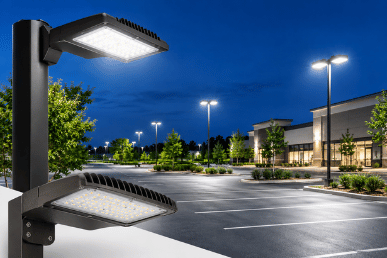
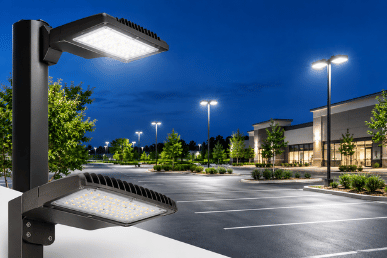
Choosing the right LED parking lot lights is an important decision for businesses, property managers, contractors, and facility owners. Parking lot lighting does more than simply illuminate a property after dark. A well-designed lighting system can improve visibility, enhance safety and security, reduce energy consumption, minimize maintenance costs, and create a more welcoming environment for customers, employees, and visitors.
With so many LED area lights, shoebox lights, pole-mounted fixtures, wattages, lumen outputs, color temperatures, and light distributions available, selecting the right fixture can seem overwhelming. The key is to look beyond wattage and consider how the entire lighting system will perform in the actual parking lot.
In this guide, we'll explain the most important factors to consider when choosing commercial LED parking lot lights and how to select the right fixture for your application.
Why Choose LED Parking Lot Lights?
Traditional parking lot lighting has historically relied on technologies such as metal halide, high-pressure sodium, and other HID lighting systems. While these technologies can provide substantial light output, modern LED technology offers several advantages for commercial outdoor lighting applications.
LED parking lot lights are highly energy efficient and can provide significant energy savings compared with older lighting technologies. LEDs also have long rated lifespans, which can reduce the frequency of lamp and fixture replacement.
Additional benefits include:
-
Lower energy consumption
-
Long operating life
-
Reduced maintenance requirements
-
Instant-on illumination
-
Better control over light distribution
-
Improved visibility
-
Compatibility with dimming and lighting controls
-
Excellent performance in outdoor environments
-
Reduced operating costs over the life of the fixture
For businesses operating parking lots throughout the night, upgrading to LED can provide both immediate and long-term benefits.
1. Determine the Required Lumen Output
One of the first specifications to consider when selecting LED parking lot lighting is lumen output.
Lumens measure the amount of visible light produced by a fixture. While wattage tells you how much electricity a fixture consumes, lumens tell you how much light it produces.
This is an important distinction when comparing modern LED fixtures.
For example, an older metal halide fixture may consume significantly more electricity while producing a similar amount of usable light compared with a modern LED area light.
However, more lumens do not automatically mean better lighting. The fixture must deliver those lumens where they are needed.
The appropriate lumen output depends on factors such as:
-
Parking lot size
-
Mounting height
-
Fixture spacing
-
Desired illumination levels
-
Traffic and pedestrian activity
-
Security requirements
-
Light distribution
-
Surrounding buildings and landscaping
A professional lighting design or photometric analysis can help determine the appropriate fixture quantity and lumen output for a specific property.
2. Consider Mounting Height
The height of your existing or proposed light poles plays a major role in determining which LED parking lot lights you should choose.
Fixtures mounted on taller poles generally need greater lumen output and an appropriate optical distribution to effectively illuminate the ground below.
Common mounting heights may include approximately 15, 20, 25, 30 feet, or more, depending on the application.
Before purchasing a fixture, determine:
-
How high the fixture will be mounted.
-
How far apart the poles are.
-
The size and shape of the parking area.
-
Where the brightest illumination is needed.
-
Whether the existing poles and mounting hardware can be reused.
Matching fixture output and distribution to mounting height helps create more uniform illumination while reducing dark areas and unnecessary hot spots.
3. Select the Right Light Distribution
Light distribution is one of the most important — and sometimes overlooked — considerations when choosing commercial LED area lights.
Parking lot fixtures are available with different distribution patterns designed to direct light toward specific areas.
Type III Distribution
Type III lighting distribution is commonly used for roadways, parking areas, and applications where light needs to project outward from the pole.
It can be a good choice when illumination is needed across a relatively broad area adjacent to the mounting location.
Type IV Distribution
Type IV distribution directs light primarily outward from the fixture and is often useful for perimeter applications or locations where illumination needs to extend away from the pole.
Type V Distribution
Type V lighting distribution produces a more symmetrical pattern around the fixture. This makes it particularly useful for applications such as parking lots where illumination is needed in multiple directions around a pole.
For example, Beacon Lighting Supply offers the EiKO VERT LED Area & Site Light with Type V distribution for broad-area applications such as parking lots, roadways, campuses, and other commercial exterior spaces.
Selecting the correct distribution can be just as important as selecting the correct lumen output.
4. Choose the Right Color Temperature
Color temperature is measured in Kelvin (K) and describes the appearance of light.
For commercial parking lot lighting, 4000K and 5000K LED lighting are common choices.
4000K
4000K produces a neutral white appearance and offers a balance between brightness and visual comfort.
It is a popular choice for:
-
Commercial parking lots
-
Office buildings
-
Retail properties
-
Apartment complexes
-
Schools
-
Business campuses
5000K
5000K produces a cooler, daylight-like appearance.
It can be useful for:
-
Industrial properties
-
Security-sensitive locations
-
Warehouses
-
Large commercial facilities
-
Areas where crisp visibility is a priority
The best color temperature ultimately depends on the property's environment, design goals, and lighting requirements.
5. Pay Attention to CRI
Color Rendering Index (CRI) measures how accurately a light source renders colors compared with a reference light source.
For many outdoor parking lot applications, 70+ or 80+ CRI may be adequate. However, applications where color recognition is important may benefit from higher CRI lighting.
Good color rendering can be particularly valuable around:
-
Retail entrances
-
Shopping centers
-
Hospitals
-
Schools
-
Commercial buildings
-
Pedestrian areas
While CRI is important, it should generally be considered alongside lumen output, distribution, efficiency, and other fixture specifications.
6. Check the Fixture's Voltage
Commercial parking lot lighting often operates on electrical systems such as 120V, 208V, 240V, 277V, or 347V depending on the application and location.
Many modern commercial LED fixtures are designed with 120-277V input voltage, giving contractors flexibility during installation.
Before ordering a fixture, always verify the electrical requirements of the existing system.
Choosing a fixture with the appropriate voltage helps prevent installation issues and supports reliable long-term performance.
7. Look for Outdoor Ratings and Durability
Parking lot fixtures are exposed to rain, snow, dust, temperature changes, wind, and other environmental conditions.
For this reason, outdoor LED parking lot lights should be designed specifically for exterior use.
Look for specifications such as:
-
UL Listed
-
Wet location rated
-
IP65 or higher protection
-
Durable aluminum housing
-
Corrosion-resistant finishes
-
Quality LED drivers
-
Appropriate operating temperature ranges
For example, the EiKO VERT LED Area & Site Light available from Beacon Lighting Supply features an IP65 rating and is UL Listed for wet locations, making it suitable for demanding commercial outdoor applications.
Durability is especially important when fixtures are installed high above the ground where maintenance and replacement can require lifts or specialized equipment.
8. Consider Energy Efficiency
One of the biggest advantages of switching to LED parking lot lighting is energy efficiency.
When comparing fixtures, look at both wattage and efficacy.
Efficacy is generally expressed as lumens per watt (lm/W). A fixture producing more lumens while consuming fewer watts can provide better energy efficiency.
For example, an LED area light producing 12,500 lumens at 100 watts provides 125 lumens per watt.
Higher-efficiency fixtures can help reduce electricity consumption, particularly in parking lots where lights may operate from dusk until dawn.
Over several years, the energy savings can become a significant part of the return on investment for an LED retrofit.
9. Consider Dimming and Lighting Controls
Modern LED parking lot fixtures can often be integrated with lighting controls.
Options may include:
-
0-10V dimming
-
Photocells
-
Motion sensors
-
Networked lighting controls
-
Time-based scheduling
-
Smart lighting systems
Controls can reduce energy consumption by allowing fixtures to operate at lower output when full illumination is not necessary.
For example, a parking lot may operate at full output during peak evening hours and then dim during periods of low activity.
When properly designed, lighting controls can help reduce operating costs while maintaining appropriate visibility and security.
10. Check DLC Qualification
For commercial lighting projects, it can also be useful to look for DesignLights Consortium (DLC) qualification.
DLC-qualified products meet specific performance criteria and may be eligible for certain utility rebate programs, depending on the location and current program requirements.
If energy rebates are an important part of your project, verify current utility requirements before purchasing your fixtures.
11. Don't Forget Pole and Mounting Compatibility
The best LED parking lot fixture will not perform properly if it cannot be installed correctly.
Before ordering, verify the fixture's mounting configuration.
Common mounting options include:
-
Slip fitter mounts
-
Direct arm mounts
-
Adjustable knuckle mounts
-
Trunnion mounts
-
Pole-top mounts
Existing parking lot poles may be compatible with a retrofit, but this should be confirmed before installation.
Also consider whether the fixture needs to be aimed in a specific direction or whether a symmetrical distribution is more appropriate.
12. Use Photometric Analysis for Larger Projects
For larger parking lots, commercial properties, and complex outdoor lighting projects, a photometric lighting analysis can be extremely valuable.
Photometric plans simulate how light will be distributed across the property and can help determine:
-
Fixture quantity
-
Pole spacing
-
Mounting height
-
Light levels
-
Uniformity
-
Light distribution
-
Potential dark areas
-
Potential over-lighting
Instead of simply replacing an existing fixture with another fixture of similar wattage, a photometric analysis allows you to design the system around the actual lighting requirements of the property.
This can improve performance while potentially reducing the number of fixtures required.
Recommended LED Parking Lot Light
One example of a commercial-grade fixture designed specifically for large outdoor applications is the EiKO VERT LED Area & Site Light.
The 100W model produces 12,500 lumens at 4000K and uses Type III distribution, making it well suited for parking areas, roadways, campuses, and other commercial exterior applications.
For larger spaces, the 240W version produces 31,000 lumens and features Type V distribution for broad, uniform coverage.
These types of LED area and site lights demonstrate why selecting a fixture based on application, lumen output, distribution, voltage, and mounting requirements is more effective than simply choosing a fixture based on wattage.
Final Thoughts: Choosing the Right LED Parking Lot Lights
Selecting the right LED parking lot lights requires more than finding the brightest fixture available. The goal is to create a lighting system that provides appropriate illumination, excellent uniformity, energy efficiency, durability, and long-term value.
Before purchasing, evaluate:
-
Lumen output
-
Wattage and efficacy
-
Mounting height
-
Pole spacing
-
Type III, Type IV, or Type V distribution
-
Color temperature
-
CRI
-
Input voltage
-
Outdoor/IP rating
-
Dimming and controls
-
DLC qualification
-
Mounting compatibility
-
Photometric requirements
Whether you're upgrading an existing parking lot, replacing outdated metal halide fixtures, designing a new commercial property, or planning an LED parking lot retrofit, choosing the right fixture can make a major difference in energy consumption, maintenance costs, safety, and overall lighting performance.
At Beacon Lighting Supply, our selection of commercial LED lighting, LED area lights, outdoor lighting, and parking lot lighting solutions can help contractors, electrical professionals, property managers, and facility owners find the right products for their projects.
The right parking lot lighting isn't simply about producing more light — it's about putting the right amount of light in the right place, at the right efficiency, and for the long term.